




What Is a Broker Portal — And Why Does Your Insurance Company Need One?

What Is a Broker Portal — And Why Does Your Insurance Company Need One?
Your brokers are still emailing you for policy status updates. Someone on your team is still manually pulling quotes into a spreadsheet before sending them out. A renewal gets missed because it lived in someone's inbox instead of a system anyone else could see.
If any of that sounds familiar, you're not behind. You're just running your broker relationships the way most insurance companies still do: through email, PDFs, and phone calls, held together by people remembering things.
The problem is that your brokers don't expect that anymore. A recent industry survey found that roughly two-thirds of insurance consumers would consider switching providers for a better digital experience. Brokers aren't so different. They're comparing you to the carriers who've already made self-service the default, and every manual step you require is a reason to place business somewhere easier.
This post covers what a broker portal actually is, what it does day to day, and how to tell if your company is at the point where building one makes sense.
what a broker portal actually is
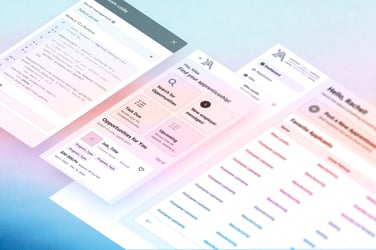
A broker portal is a secure, logged-in space where your brokers can do the things they currently do over email or phone, but without waiting on someone at your company to do it for them.
Think of it less as a feature and more as a replacement. Instead of emailing your team for a quote, a broker logs in and pulls one. Instead of calling to check on a renewal, they see its status themselves. Instead of digging through old email threads for a policy document, it's sitting in their portal account.
Done well, a broker portal runs on top of your CRM, so the information brokers see is the same information your team sees internally. No separate system to keep in sync, no risk of a broker acting on outdated information because nobody updated a spreadsheet.
You can read more about how we approach portal development built on top of a CRM like this, but the short version is: the portal is only as good as the data behind it. That's the part most companies underestimate.
what it actually does, day to day
Strip away the buzzwords and a broker portal handles a fairly short list of real jobs:
- Quoting. Brokers request and receive quotes without a back-and-forth email chain.
- Policy status. Brokers see where a policy is in the pipeline instead of asking.
- Document access. Policy documents, forms, and certificates live in one place brokers can reach any time.
- Renewals. Upcoming renewals are visible before they become a fire drill.
- Client and book-of-business visibility. Brokers managing a large book can see their full portfolio at a glance instead of tracking it themselves.
None of this is exotic. It's the same work your team already does. The portal just moves it out of inboxes and into a system built for it.
broker portal vs. customer portal vs. employee portal
Not every portal is solving the same problem. A broker portal serves the people who sell and service your policies. A customer portal serves your policyholders directly, letting them view coverage or file a claim. An employee portal serves your own internal team.
They can share the same underlying CRM, but the audience, permissions, and content are different. If you're trying to figure out which one (or combination) fits your situation, that's worth its own conversation. For now, the important thing is knowing that "we need a portal" is really a question of "a portal for whom."
signs your insurance company needs one
You don't need a broker portal because it's trendy. You need one when specific things start happening:
Brokers are complaining about response time. If "how long until I hear back" is a recurring theme in broker feedback, that's not a people problem. That's a systems problem.
Your team is manually reconciling information across tools. If someone is copying data between your CRM, a spreadsheet, and email threads to answer a broker's question, that's time spent on data entry instead of relationships.
You've grown through acquisition and inherited multiple ways of doing the same thing. Different brokers on different systems, different processes, no single place to manage the relationship. This is common enough in insurance that we see it across nearly every M&A-driven company we talk to.
Renewals are tracked by memory or calendar reminders instead of a system. If a missed renewal is one distracted week away from happening, you're relying on people to be perfect instead of a process that catches it for you.
If two or three of these sound like your company, it's worth taking seriously. This pattern isn't unique to insurance. We've seen the same signals play out in financial services firms and in medical practices that reached the same point, for the same underlying reasons.
why this is harder to build than it looks
Here's the part most companies don't realize until they're partway into a project: a broker portal is not a simple login page bolted onto your website.
It has to reflect real permission structures (a broker should see their book of business, not everyone else's). It has to stay in sync with your CRM in real time, not on a nightly batch job. And it has to hold up to the same security and compliance scrutiny as everything else in a regulated industry.
This is where a lot of broker portal projects go sideways. A general web development agency can build something that looks like a portal in a demo. Whether it holds up once real brokers, real data, and real permission rules are involved is a different question entirely.
According to Applied Systems' Digital Adoption Report, a significant share of brokerages still don't have a digital strategy in place at all, often because the technical lift feels bigger than the team knows how to plan for. That gap is exactly where a portal project either succeeds or quietly stalls out.
what to do next
If you're recognizing your own company in the signs above, the next useful step isn't picking a vendor. It's getting clear on what your brokers actually need versus what would just be nice to have, and what your CRM can already support versus what needs to be built.
We've built portal experiences on top of HubSpot for companies wrestling with exactly this, and you can see examples of that work in our portfolio. If you want to talk through whether a broker portal makes sense for where your company is right now, schedule a conversation with us.

Written by:
Dylan WickliffeDylan Wickliffe is a former HubSpotter and the current VP of Growth at media junction®. With eclectic experience ranging from the Marine Corps, to ministry, healthcare, SaaS, and even entrepreneurship, Dylan has learned to take pride in his unique approach to sales: "Dont make sales weird—sell like a HUMAN."
Related Topics: